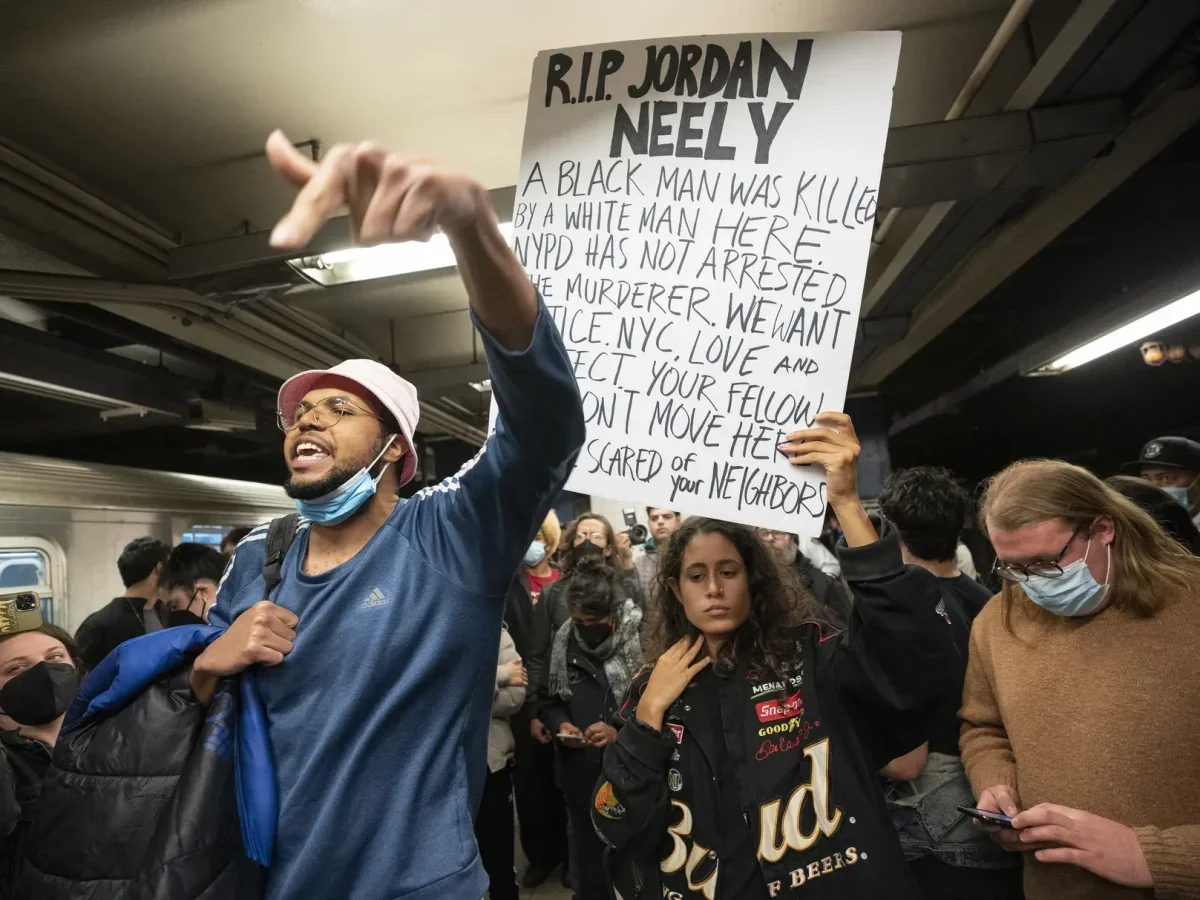
The May 2023 subway incident is one of those moments that basically froze New York City in its tracks. You've probably seen the grainy cell phone footage. It’s hard to watch. A young man named Jordan Neely—a well-known Michael Jackson impersonator who had fallen on incredibly hard times—ends up in a fatal chokehold on the floor of an F train. The man holding him? Daniel Penny, a 24-year-old Marine veteran.
When the news first broke, the internet did what it always does. It fractured. One side saw a Good Samaritan protecting a crowded train car from a clear threat. The other side saw a tragic case of vigilantism against a vulnerable man in a mental health crisis. But in the middle of all the noise, one question kept popping up, often whispered in comment sections or debated on cable news: Did Jordan Neely have a weapon?
Honestly, the answer is straightforward, yet it’s exactly what makes the legal and ethical debate so messy.
The Search Results: What the NYPD Found
When the train doors finally opened at the Broadway–Lafayette Street station and the police swarmed the car, they did what they always do in a violent encounter. They searched the body. They searched the area. They looked for the "why."
Jordan Neely was unarmed.
He didn't have a knife. He didn't have a gun. He wasn't brandishing a box cutter or a heavy object. When investigators emptied his pockets, they didn't find a weapon of any kind. They found a muffin.
That’s a detail that sticks with you. A man who was screaming about being hungry and thirsty, who told a car full of strangers he was "ready to die," literally had nothing but a piece of food on him.
The Disconnect Between Reality and Perception
So, if there was no weapon, why did Daniel Penny—and several other passengers who helped him—feel the need to use physical force? This is where the trial of Daniel Penny really got into the weeds.
You have to look at the environment. Subways are cramped. There’s nowhere to run when the doors are closed. Witnesses testified that Neely entered the car in a "satanic" rage. He wasn't just asking for change; he was throwing his jacket on the floor, screaming that he didn't care if he went back to jail for life.
One passenger, a mother, testified that she was so terrified she shielded her five-year-old son with her own body. For her, the "weapon" wasn't a physical object. It was the unpredictable, high-energy aggression coming from a man who seemed to have nothing left to lose.
The Defense's Argument
Penny’s legal team, led by Steven Raiser, didn't try to claim Neely had a hidden blade. They didn't need to. In New York law, "justification" (self-defense) depends on what a "reasonable person" would believe in that moment.
Their argument was basically this:
- Penny didn't know if Neely was armed.
- The threats to "kill" made it reasonable to act as if he were.
- The goal was restraint, not death.
The defense focused on the idea that you don't wait to see a knife before you protect a child. They brought in a pathologist, Dr. Satish Chundru, who even argued that the chokehold wasn't the sole cause of death—pointing instead to a "perfect storm" of synthetic marijuana (K2) in Neely's system, his schizophrenia, and a sickle cell trait that can cause complications under extreme physical stress.
The Prosecution's Counter
The Manhattan District Attorney’s office saw it differently. They conceded that Neely was acting erratically. They even admitted he was scary. But their point was that unarmed means "non-lethal."
"The defendant used way too much force for way too long," the prosecutors told the jury. They argued that once the train hit the station and the doors opened, the "threat" was effectively over. People could leave. Yet, the video showed Penny maintaining that grip for minutes after Neely had stopped struggling. To them, the lack of a weapon proved that the level of force used was "reckless."
The Verdict and the Lingering Question
In December 2024, the trial ended in an acquittal. Daniel Penny was found not guilty of criminally negligent homicide. The jury deadlocked on the more serious manslaughter charge, which was eventually dismissed.
Legally, the jury decided that Penny’s perception of a threat was enough to justify his actions, regardless of whether a physical weapon existed.
But for many, the "no weapon" fact remains the moral center of the tragedy. It highlights a massive failure in how we handle mental health. Neely had been on the city's "Top 50" list of homeless individuals in dire need of intervention. He had been arrested dozens of times. He was a person the system knew was struggling, yet he ended up on that floor, unarmed, and losing his life over a mental health episode in public.
Lessons from the Neely Case
If you’re trying to make sense of this, there aren't many "feel good" takeaways. It’s a tragedy of errors and systemic neglect. However, there are a few practical insights we can glean from the legal fallout and the evidence presented:
- Perception vs. Reality: In a legal sense, a person doesn't actually have to have a weapon for a "self-defense" claim to work. The jury looks at whether the person reasonably believed there was a threat of deadly force.
- The "Duty to Retreat": In New York, you generally have a duty to retreat if you can do so safely. The prosecution's strongest point was that Penny didn't let go once the train doors opened—a moment where "retreat" became possible for everyone.
- Mental Health is the Real Crisis: The fact that Neely was unarmed suggests his "weapon" was his voice and his despair. Dealing with that requires social workers and rapid-response mental health teams, not just commuters or police.
If you find yourself in a high-tension situation in a public space, the best "actionable" advice from legal experts is usually to de-escalate or create distance rather than engage. Once physical force starts, the legal "clock" begins, and every second you maintain that force is a second that will be scrutinized in a courtroom for years to come.
The Jordan Neely case didn't change the laws on self-defense, but it definitely changed the conversation about what we owe to the people screaming for help in our peripheral vision.
Next Steps for Understanding Public Safety Laws:
- Research "Article 35" of the New York Penal Law to understand how "justification" is defined.
- Look into the "Good Samaritan" laws in your specific state, as they vary wildly regarding physical intervention.
- Check out local de-escalation training programs (like those offered by conflict resolution non-profits) which teach how to handle verbal aggression without resorting to physical force.