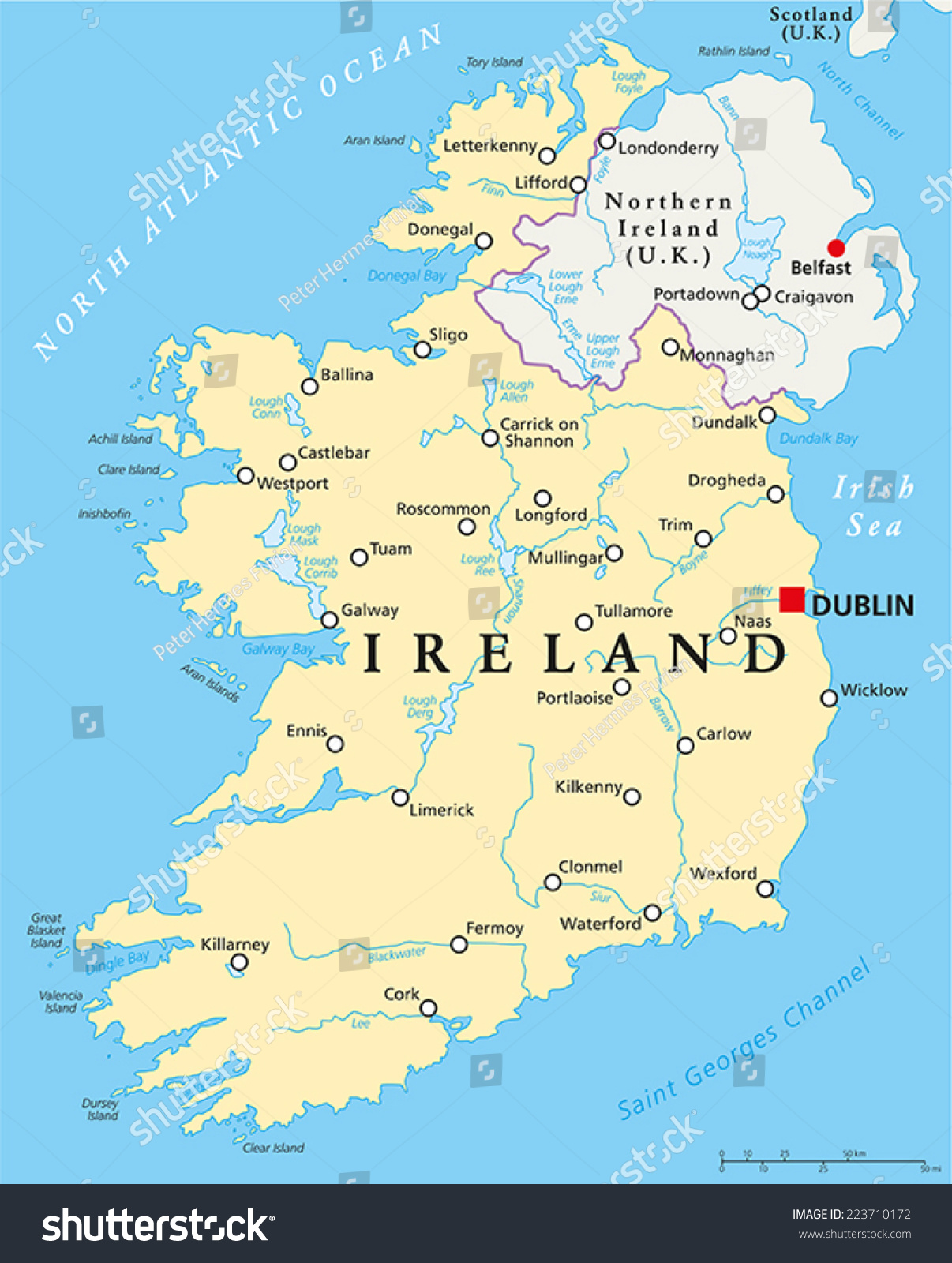
So, you’re looking for the quick answer: Dublin is the capital of Ireland. Honestly, it’s not even a contest. If you look at a map, it’s that big, buzzing spot right on the east coast where the River Liffey hits the Irish Sea.
But here is the thing. Calling Dublin "the capital" is kinda like saying a Guinness is just "a drink." Technically true, sure, but it misses the whole vibe. Dublin isn't just the place where the government sits; it’s the economic engine, the Viking-founded heart, and the cultural powerhouse of the entire island. It's a city of about 1.4 million people in the greater area, which, for a small island like Ireland, is absolutely massive.
Why Dublin became the capital (and stayed that way)
You’ve gotta realize that Dublin wasn’t always the undisputed heavy-hitter. Back in the day—we’re talking way back, like the 7th century—the area was basically two separate spots. One was called Dubh Linn (Black Pool) and the other was Baile Átha Cliath (Town of the Hurdled Ford). Fun fact: if you ever see an Irish road sign, it’ll still say Baile Átha Cliath today.
The Vikings really got things moving around 841 AD. They saw the strategic value of the coast. Later, the Normans showed up in the 12th century and decided Dublin was the perfect place to run their show from Dublin Castle. From that point on, it became the seat of power. By the 1700s, Dublin was actually the second-largest city in the British Empire, just behind London.
A quick look at the "Two Dublins"
If you walk around the city today, you’ll notice it’s basically split in half by the River Liffey.
- The Northside: Historically more working-class, home to O’Connell Street, the GPO (huge for Irish history), and the Phoenix Park.
- The Southside: Generally seen as the "posher" side, where you'll find Trinity College, the high-end shops on Grafton Street, and the famous colorful Georgian doors.
It's a rivalry Dubliners take very seriously, though it's mostly just for the banter these days.
More than just politics
While the Dáil (the Irish Parliament) meets at Leinster House, the city’s identity has shifted a lot lately. In 2026, Dublin is basically the tech capital of Europe. You’ve got the "Silicon Docks" area where Google, Meta, and TikTok have their European headquarters. It’s brought a ton of international energy to the city, making it way more multicultural than it was even twenty years ago.
Honestly, it’s an expensive place to live. If you’re planning a visit, you’ll notice the prices. Housing is a massive issue right now, and the city is grappling with how to grow without losing its soul. But even with the high costs, there’s a reason people keep coming.
What to actually see when you get there
If you’re visiting the capital, don’t just do the tourist traps. Here is the move:
- Kilmainham Gaol: It’s a former prison. It sounds grim, but it’s arguably the most important site for understanding how Ireland became a republic.
- The Liberties: One of the oldest neighborhoods. It’s where the real Dublin lives. You can smell the roasted hops from the Guinness Storehouse nearby.
- Howth or Dalkey: Take the DART (the coastal train). It takes 30 minutes, and suddenly you’re on a cliff walk overlooking the ocean. It's the best way to escape the city noise.
Is there another capital?
Sorta, but not really. This is where it gets a little confusing for people.
Belfast is the capital of Northern Ireland, which is part of the United Kingdom. Dublin is the capital of the Republic of Ireland (the sovereign country). Even though they are on the same island, they are different jurisdictions.
Moving forward in 2026
Dublin is currently undergoing a massive transformation. The city council is pushing hard on "Dublin City 2030" plans, which involve pedestrianizing more of the center and trying to fix the transport bottlenecks. If you’re heading there soon, expect some construction. It’s a city that’s constantly trying to catch up with its own growth.
Actionable Next Steps:
- Check the Leap Card: If you're visiting, download the Leap Top-Up app. It's the only way to get around on buses and trams without fumbling for exact change (which they still weirdly require on many buses).
- Book Ahead: For things like the Book of Kells or Kilmainham Gaol, you basically have to book weeks in advance now. Don't show up expecting to walk in.
- Explore the "Stay Left" rule: If you’re driving or even just walking, remember we’re on the left side here. It trips up a lot of visitors at the crosswalks!
The capital in Ireland is a lot of things—loud, historic, pricey, and beautiful—but it's never boring.