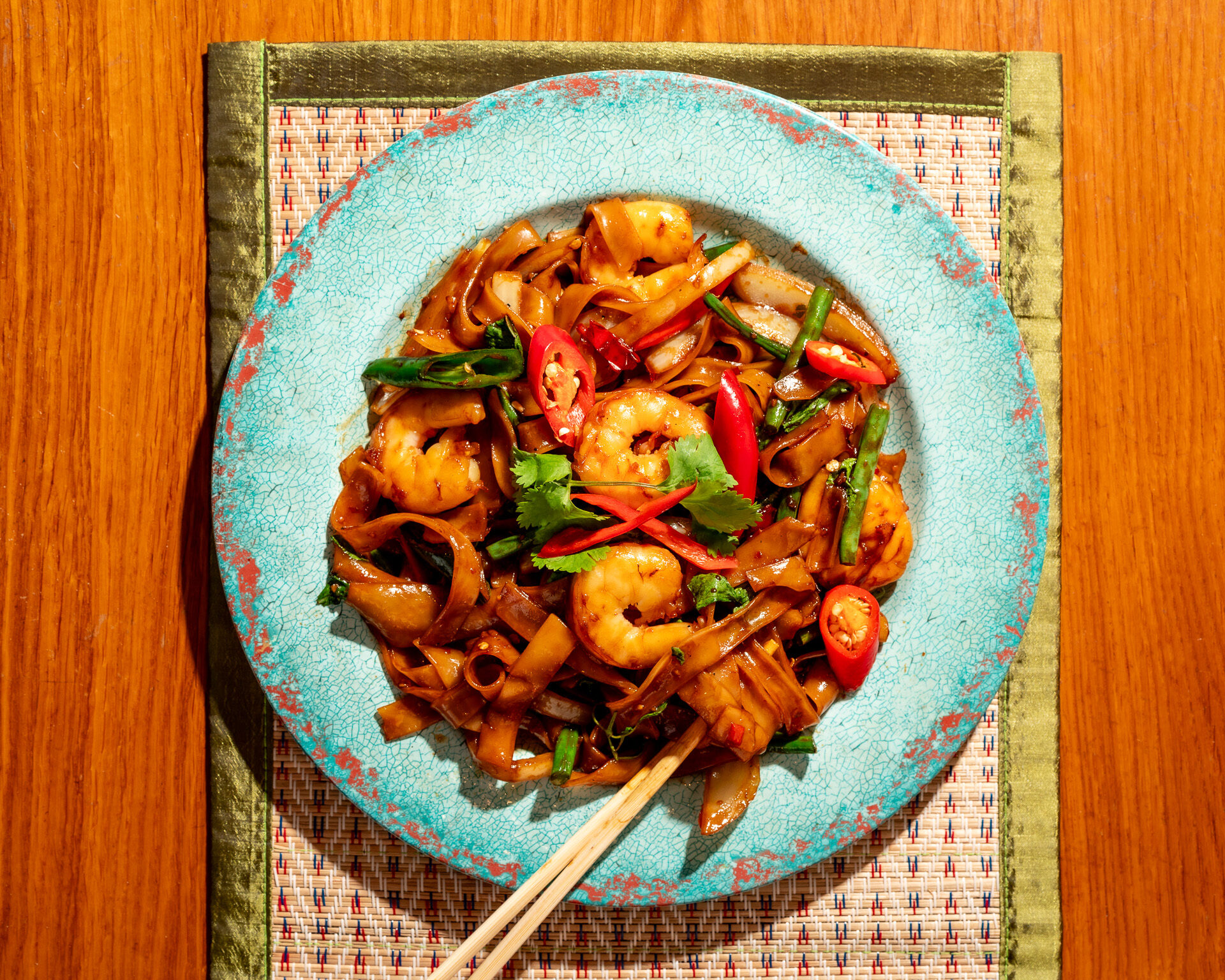
If you've ever sat in a dimly lit Thai restaurant, sweat pricking your forehead after a bite of spicy, basil-heavy noodles, you’ve probably wondered why they’re called "Drunken Noodles." It's a weird name. Does the chef pour a bottle of Mekhong rum into the wok? Probably not. The actual drunken noodles Thai name is Pad Kee Mao (ผัดขี้เมา), and honestly, the literal translation is way more interesting than the English nickname suggests.
Pad means fried. Kee Mao means drunkard.
Put them together and you get "Stir-fried Drunkard." It’s a dish with a personality—brash, loud, and unapologetically spicy. If Pad Thai is the polite, sweet ambassador of Thai cuisine, Pad Kee Mao is the friend who stays out until 4:00 AM and knows all the best street food stalls. Understanding the drunken noodles Thai name helps explain why the dish tastes the way it does. It isn't just about noodles; it’s about a specific Thai culinary subculture called kap klaem, which basically translates to "drinking food" or "food to be eaten with alcohol."
The Origin Stories: Why the "Drunkard" Label?
Nobody actually knows the exact moment someone tossed wide rice noodles into a wok and called them "drunk." In Thailand, culinary history is often passed down through taste and tradition rather than written records. However, three main theories dominate the conversation among food historians and Thai locals.
The most popular theory is the "Hangover Cure." Imagine waking up after a long night. Your head is pounding. You need something to shock your system back to life. In Thailand, that's often a plate of Pad Kee Mao. The sheer heat from the bird’s eye chilies and the pungent aroma of holy basil are enough to clear any alcohol-induced fog. Some say a drunk person once came home, found random ingredients in their fridge, and tossed them together in a spicy frenzy. It’s the "kitchen sink" approach to cooking.
Another version suggests the name comes from the cook, not the eater. The idea is that the dish is so spicy that only someone who is already drunk—and therefore has a dulled palate—could handle the intensity. If you’ve ever had a version that truly honors the drunken noodles Thai name, you know the heat is no joke. It lingers. It builds. It makes you reach for a cold Singha beer, which, funnily enough, is the third theory: the dish was specifically designed to be so salty and spicy that it forces you to drink more.
It's a cycle. You eat, you get thirsty, you drink, you get hungry, you eat more noodles.
Holy Basil vs. Thai Basil: A Crucial Distinction
One thing that gets lost in translation when we talk about the drunken noodles Thai name is the specific type of basil used. In the West, many restaurants use Thai Sweet Basil (Horapa). It has purple stems and a licorice-like flavor. It's fine, but it’s not authentic Pad Kee Mao.
True Pad Kee Mao uses Holy Basil (Krapow).
Holy basil is peppery. It’s spicy in its own right. When it hits the hot oil of the wok, it releases a scent that is almost medicinal and deeply savory. In Thailand, the "Kee Mao" style of cooking can be applied to many things—Kee Mao fried rice, Kee Mao seafood—but the common thread is always the combination of fresh chilies, garlic, and that unmistakable Holy Basil kick. If you're looking for the real deal, ask the server if they use Krapow. It changes the entire profile of the dish.
What Makes Pad Kee Mao Different From Pad See Ew?
People get these two confused all the time. They both use those beautiful, wide, flat rice noodles called Sen Yai. They both have a dark soy sauce base. But that’s where the similarities end.
Think of Pad See Ew as the comfort food. It’s sweet, salty, and mild. It usually features Chinese broccoli (Gai Lan) and egg. It's the dish you order when you want a hug in a bowl.
Pad Kee Mao is the opposite. There is usually no egg. There are often more vegetables—think baby corn, long beans, or bell peppers—and, most importantly, there is a massive amount of chili and basil. While Pad See Ew relies on the caramelization of dark soy sauce for flavor, the drunken noodles Thai name represents a dish that relies on aromatics. You should smell the garlic and chili before the plate even touches the table.
The Anatomy of the Perfect Pad Kee Mao
- The Noodles: They must be Sen Yai. If they are thin like Pad Thai noodles, it's not Pad Kee Mao. They should be wide and slippery, with "wok hei"—that charred, smoky breath of the wok that only comes from high-heat cooking.
- The Protein: Shrimp and squid are very traditional, especially in coastal regions of Thailand, but pork and chicken are ubiquitous. Some modern versions even use beef, though it’s less common in traditional street stalls.
- The Aromatics: A paste of garlic and Thai bird’s eye chilies. It’s usually pounded in a mortar and pestle. This releases the oils and creates a more integrated heat than just slicing the peppers.
- The Sauce: A balance of oyster sauce, light soy sauce, dark soy sauce (for color), and a pinch of sugar. Unlike Pad Thai, there is no tamarind here. The sourness, if any, comes from a squeeze of lime at the very end.
The Regional Evolution of the Name
While we call it Pad Kee Mao today, the dish actually has roots in the culinary influence of the Teochew people who migrated to Thailand. They brought the wide rice noodles. Thais took those noodles and added the local flavors: chilies, fish sauce, and basil. It’s a perfect example of fusion that happened so long ago it’s now considered "purely" Thai.
Interestingly, if you travel to the North of Thailand, you might find variations that include green peppercorns or fingerroot (krachai). These ingredients add a complex, earthy heat that makes the "Drunken" part of the name feel even more appropriate. It’s a wilder, more herbal version of the dish that you rarely see in suburban takeout spots in the US or UK.
Why the Drunken Noodles Thai Name Matters for Your Order
When you know the name Pad Kee Mao, you gain a bit of "foodie" street cred, sure, but you also understand the expectations. If you order "Drunken Noodles" and it arrives sweet and mild, the restaurant is likely catering to a Western palate. Real Kee Mao should make you sweat just a little bit. It should be "bold" in every sense of the word.
Also, knowing the name helps you navigate a Thai menu like a pro. Often, the best Thai spots have two menus—the one for tourists and the one with the "real" stuff. Look for the Thai script or the phonetic Pad Kee Mao.
Common Misconceptions About the Dish
Let’s clear something up: there is usually zero alcohol in the recipe. I’ve seen some "fusion" recipes online that suggest adding a splash of sherry or rice wine. Don't. It's not part of the traditional flavor profile. The "drunkenness" is all about the spirit of the dish and the people who eat it late at night under a corrugated metal roof at a street corner in Bangkok.
Another myth is that it’s just Pad Thai with different noodles. Actually, the flavor profiles are worlds apart. Pad Thai is built on the trifecta of sweet (palm sugar), sour (tamarind), and salty (fish sauce). Pad Kee Mao is built on the duo of spicy (chili) and savory (soy/oyster sauce), punctuated by the herbaceousness of basil.
How to Make It Feel Authentic at Home
If you're trying to recreate the drunken noodles Thai name experience in your own kitchen, the biggest hurdle is the heat. Most home stoves don't get hot enough to create that "wok hei" sear. To compensate, cook in small batches. If you crowd the pan, the noodles will steam and turn into a mushy mess instead of getting those crispy, charred edges.
Also, try to find fresh wide rice noodles. They usually come in a vacuum-sealed pack at Asian grocers. If you can only find dried ones, soak them until they are al dente—if you over-soak them, they will fall apart the moment they hit the wok.
Actionable Steps for the Thai Food Lover
If you want to truly experience what the drunken noodles Thai name stands for, follow these steps next time you're on the hunt for a meal:
- Seek out "Street Food" style restaurants. Look for places that specifically mention Kee Mao or "Drunkard's style" on their specialty menu.
- Verify the basil. Ask if they use Holy Basil. If they do, you've found a place that respects the tradition.
- Adjust your spice expectations. Don't ask for "mild" Pad Kee Mao. It's like asking for a dry glass of water. The heat is the point. If you can't handle spice, Pad See Ew is your best friend.
- Pair it correctly. Drink it with a crisp lager or a cold sparkling water with lime. The carbonation helps scrub the chili oil off your tongue between bites.
- Look for the char. When the plate arrives, look for dark brown or blackened spots on the noodles. That's where the flavor lives.
The world of Thai noodles is vast, but Pad Kee Mao remains a fan favorite for a reason. It's a dish that tells a story of late nights, bold flavors, and the universal human need for a spicy meal after a long day (or night). Next time you see it on a menu, you won't just be looking at a funny name; you'll be looking at a piece of Thai culture that has conquered the world, one spicy bite at a time.