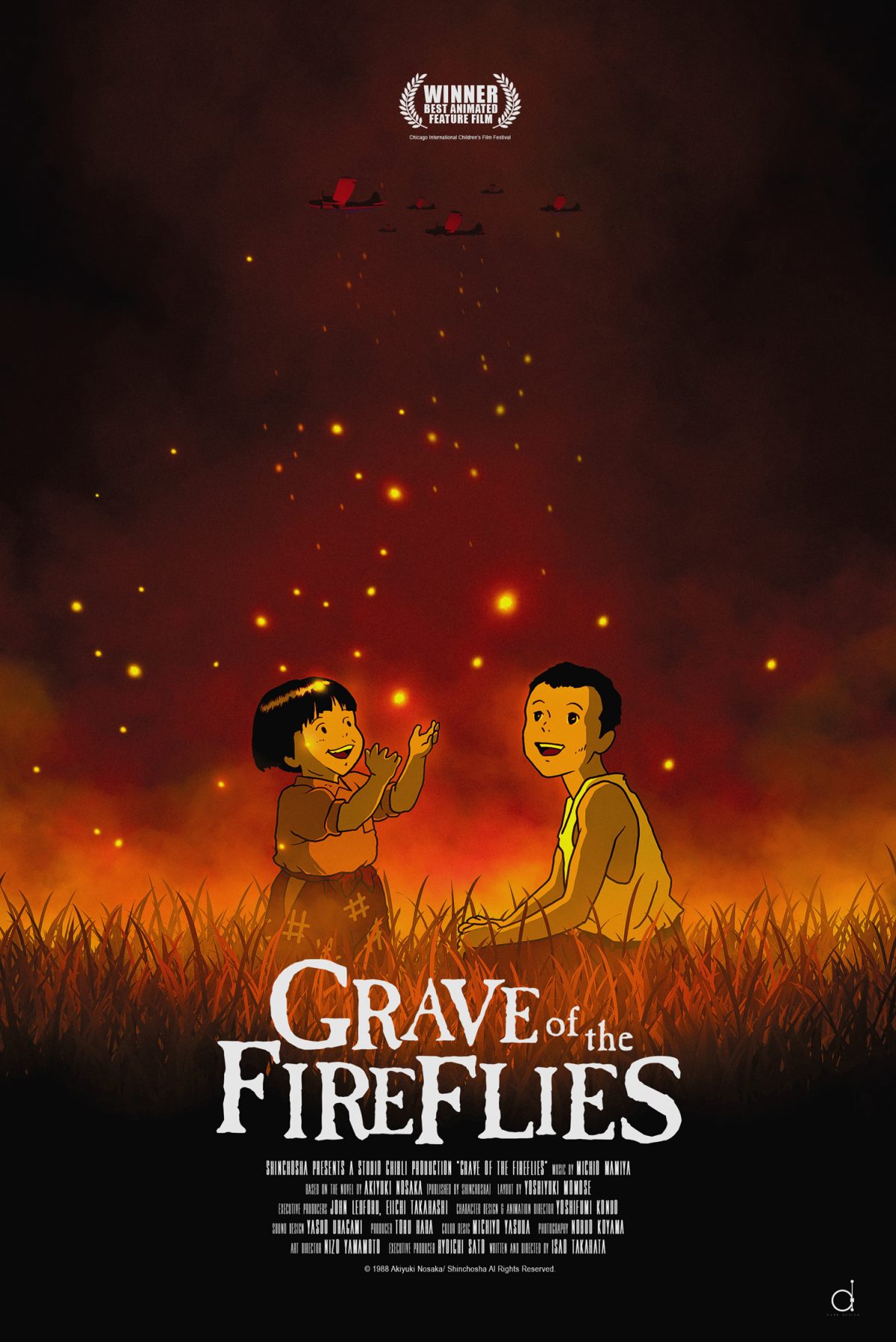
Most people know the tears. They know the visceral, gut-punch feeling of watching Seita and Setsuko struggle in a hillside dugout while the world around them burns. But honestly, most fans of the Studio Ghibli film don't realize that the grave of the fireflies short story is actually a semi-autobiographical confession. It’s a piece of "apology literature." It wasn't written just to tell a sad tale about the war; it was written because Akiyuki Nosaka couldn't live with the guilt of surviving while his little sister didn't.
That changes things, doesn't it?
The original story, titled Hotaru no Haka, first appeared in 1967. It’s short. You can read it in a single sitting, though you probably shouldn't if you value your emotional stability. While Isao Takahata’s 1988 film is legendary for its beauty and its harrowing pacing, the prose version is sharper. It’s meaner. It cuts through the nostalgia and hits you with the stench of death and the reality of a boy who was, in his own words, far less heroic than the Seita we see on screen.
Why the Grave of the Fireflies Short Story is Harder to Digest Than the Movie
In the film, Seita is a tragic figure. We root for him. We see him as a victim of a society that failed its children. But when you dive into the grave of the fireflies short story, Nosaka paints a much darker picture of the protagonist. Nosaka based Seita on himself, but he wrote the story as a way to punish himself for the way he actually treated his sister, Keiko, during the 1945 firebombing of Kobe.
The prose is jagged. It’s filled with sensory details that a camera can't quite capture—the specific smell of rotting flesh mixed with scorched earth. In the story, Seita isn't just proud; he’s sometimes selfish. Nosaka admitted in various interviews later in his life that he often ate food himself instead of giving it to his sister. He even hit her.
"I was a coward," he once said. The short story was his way of giving his sister the "ideal" brother he failed to be, while simultaneously immortalizing his own perceived failures.
The Real History of 1945 Kobe
The backdrop isn't some generic war setting. It’s June 5, 1945. The B-29 Superfortress bombers dropped thousands of tons of incendiary bombs on Kobe. This wasn't "collateral damage." It was a deliberate attempt to break the Japanese spirit by incinerating wooden houses.
In the original grave of the fireflies short story, the descriptions of the black rain and the charred bodies are clinical. Terrifyingly so. Nosaka lived through this. He saw his father disappear in the fire. He saw his adoptive mother severely burned. He was left alone with a four-year-old girl and a one-year-old girl. People forget that in real life, there were two sisters. One died of illness shortly after the bombing. The other, Keiko, is the one who starved to death in Fukui, just like Setsuko.
The Semantic Meaning of the Fireflies
Why fireflies? It’s not just for the pretty visuals. In Japanese culture, fireflies (hotaru) are often metaphors for the souls of the dead. They burn bright and die fast.
In the grave of the fireflies short story, the fireflies represent the fragility of the children’s lives, but they also serve a literal purpose. They provide light in the darkness of the cave. But that light is temporary. It’s deceptive. When Setsuko digs a grave for the fireflies the next morning, she isn't just mourning insects. She’s acknowledging the inevitability of her own death and her mother's death.
Key Differences Between the Page and the Screen
If you’ve only seen the movie, you’re missing some of the psychological weight.
- The Narrator's Voice: The short story uses a detached, almost haunting narrative style. It doesn't ask for your pity. It demands your witness.
- The Ending: While both are devastating, the short story emphasizes the isolation more heavily. The prose dwells on the physical decay of the bodies in a way that hand-drawn animation softens.
- The Motivation of the Aunt: In the movie, the aunt is a villain. In the short story, Nosaka provides a bit more context—though she’s still harsh. She’s a woman trying to keep her own biological children alive in a world where food is a zero-sum game. It’s not an excuse, but the book makes the social collapse feel more systemic than personal.
Akiyuki Nosaka: The Man Who Couldn't Forget
You can't talk about the grave of the fireflies short story without talking about Nosaka himself. He was a flamboyant figure in Japan—a singer, a politician, and a writer. But he was always haunted.
He wrote the story twenty-two years after the war ended. Imagine carrying that weight for over two decades. He won the prestigious Naoki Prize for it in 1967. Even then, he felt like he was profiting off his sister's death. That complexity is baked into every sentence. The words are heavy with the "survivor's guilt" that defined a whole generation of Japanese youth who outlived the firebombs.
The Cultural Impact of the Text
When the story was first published, it hit a nerve. Japan was in the middle of an economic miracle. People were moving on. They were buying televisions and cars. They wanted to forget the hunger of the 1940s.
Nosaka’s grave of the fireflies short story forced them to look back. It wasn't just a story for kids—though it's often categorized as "war literature" for students. It was a confrontation. It asked: What did we lose to get here?
Common Misconceptions About the Story
One huge misconception is that the story is an anti-war statement. While Isao Takahata famously said the movie wasn't meant to be an anti-war film (it was about the failure of communication and the isolation of youth), the short story is even more focused on the individual. It’s a character study of a boy who refuses to participate in a broken society, and the price he pays for that rebellion.
Another mistake? Thinking the story is purely fictional. While it's a "short story," it functions more like a memoir with the names changed. Every time Seita fails Setsuko in the book, it’s a reflection of a real moment where Nosaka felt he failed Keiko.
How to Find and Read the Original Work
The grave of the fireflies short story is often bundled in anthologies. If you’re looking for it in English, look for the translation by James R. Abramson. It captures that frantic, desperate energy of the original Japanese text.
You should also look for it in the collection titled The Cake Tree in the Ruins, which features other war stories by Nosaka. They all share that same DNA—hunger, fire, and the strange, dark things humans do when they're pushed to the edge.
Essential Insights for Collectors and Students
If you're studying this for a class or just because you’re a Ghibli completist, pay attention to the food. Food is the currency of the story. The Sakuma drops aren't just candy; they are a symbol of a lost civilization. In the prose, the way Nosaka describes the thinning of the rice gruel is like watching a life drain away. It’s meticulous. It’s agonizing.
Actionable Steps for Further Exploration
To truly understand the depth of this work, don't just stop at the Ghibli movie. The story has layers that require a bit of extra effort to peel back.
- Read the 1967 Short Story First: Before re-watching the film, read the prose. Notice the difference in Seita’s internal monologue. It’s much more cynical than the movie suggests.
- Research the Kobe Firebombing (Operation Meetinghouse): Understanding the scale of the destruction—specifically the use of M69 incendiary clusters—makes the "black rain" mentioned in the story much more terrifying.
- Compare the 2005 and 2008 Live-Action Versions: Yes, they exist. The 2005 TV movie actually tells the story from the perspective of the aunt. It provides a fascinating, if controversial, counterpoint to the grave of the fireflies short story.
- Look into the Naoki Prize: Research why this story won Japan's most popular literary award. It helps frame the story within the context of 1960s Japanese literature.
- Visit the Memorials: If you ever find yourself in Kobe, there are memorials dedicated to the victims of the firebombings. Standing in the physical space where these events happened gives the short story a weight that no medium can replicate.
The grave of the fireflies short story remains one of the most powerful pieces of literature to come out of World War II. It’s a brutal, honest, and deeply personal apology from a brother to a sister he couldn't save. It’s not just a story; it’s a scar. And like all scars, it has a story to tell if you’re willing to listen.