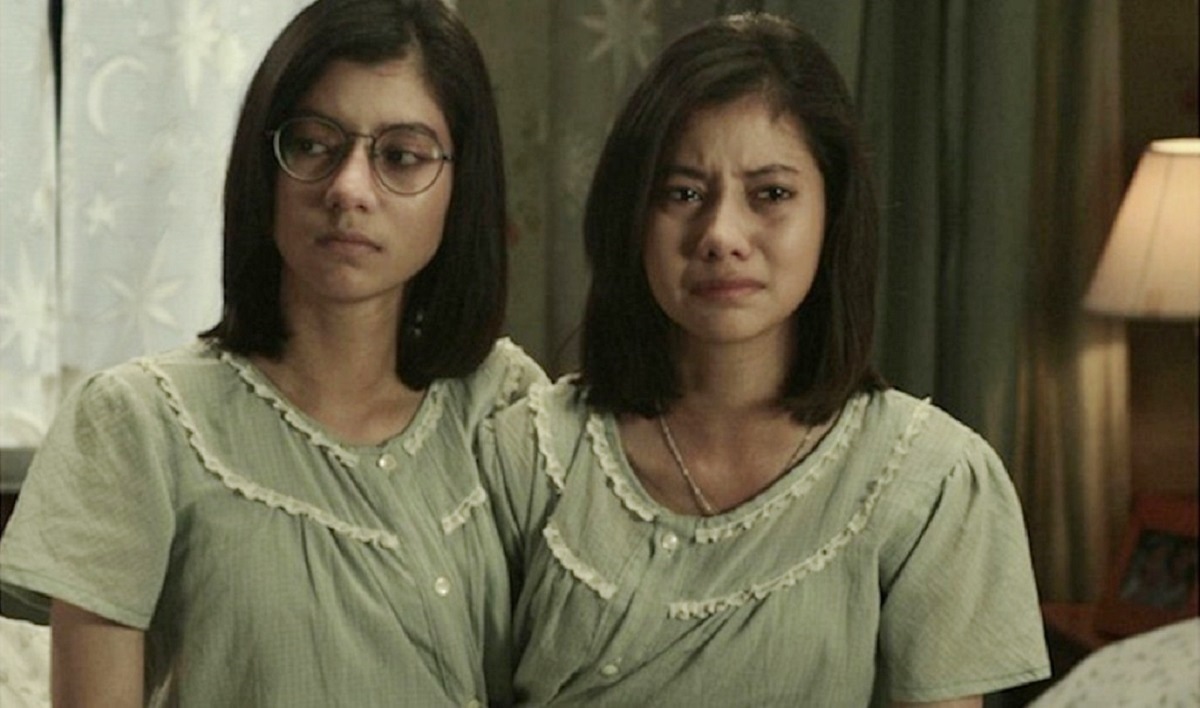
Ever had that feeling where you're looking in a mirror and for just a split second, you don't recognize the person staring back? That's the baseline anxiety of Alone, the 2007 Thai horror powerhouse that basically ruined reflections for an entire generation.
If you were around the Asian horror scene in the mid-2000s, you knew the names Banjong Pisanthanakun and Parkpoom Wongpoom. They were the "it" duo. After they dropped Shutter in 2004, everyone expected them to miss. They didn't. Instead, they gave us a story about conjoined twins that was so emotionally messy it actually hurt to watch.
The Setup You Think You Know
So, here’s the gist. Pim is living a pretty decent life in South Korea with her husband, Wee. Then the dreaded phone call comes: her mother has had a stroke back in Thailand. Pim goes back. The house is huge, old, and creepy. Standard horror stuff, right?
But the baggage Pim carries isn't metaphorical. She was born as a conjoined twin, attached at the stomach to her sister, Ploy. Pim was the "sweet" one; Ploy was the "difficult" one. When they were fifteen, they underwent a separation surgery. Pim survived. Ploy didn't.
Now, back in that childhood house, Pim starts seeing things. She hears Ploy breathing next to her in bed. She sees a face over her shoulder in the elevator. It’s classic vengeful ghost territory. Or so we think.
Why Alone (2007) Isn't Just Another Ghost Story
Honestly, what makes the alone thailand horror movie experience so different from the J-horror "long-haired girl in a well" trope is the sheer weight of the guilt. It’s a movie about the physical and psychological cost of wanting to be an individual.
The flashbacks are where the real meat is. We see the girls as teenagers, played brilliantly by Hatairat and Rutairat Egereff. They’re inseparable, literally. But then they meet Wee (the younger version played by Namo Tongkumnerd). Wee likes Pim. Ploy is jealous. It’s a love triangle where two of the participants can’t actually walk away from each other.
That’s a nightmare. Imagine your sibling being there for every private thought, every crush, every moment of rejection. The directors use this to build a sense of claustrophobia that a normal haunted house movie just can't touch.
That Mid-2000s Thai Horror Aesthetic
Thai horror in this era had a specific look. It was crisp but grimy. The cinematography by Niramon Ross in Alone is surgical. Think of the scene in the bathtub. It’s quiet. It’s intimate. And then it becomes terrifyingly violent.
The movie doesn't rely solely on CGI. It uses practical tricks—shadows, reflections, and the way Marsha Vadhanapanich (who plays the adult Pim/Ploy) shifts her body language. Marsha was a huge pop star in Thailand, and this was her big return to acting. She carried the whole film.
The Twist That Changed Everything
SPOILER ALERT: If you haven't seen a movie from 2007 yet, skip this section. But also, what are you doing?
The "big reveal" in Alone is why people still talk about it. We spend the whole movie thinking Pim is being haunted by the ghost of Ploy. We pity her. We root for her.
Then we find out the truth. The girl who survived the surgery wasn't Pim.
It was Ploy.
Ploy killed Pim in a fit of jealous rage before the surgery. She then forced the doctors to separate them so she could "become" Pim and steal her life—and her boyfriend. The "ghost" haunting the house isn't the villain; she’s the victim. Pim is trying to reclaim the life that was stolen from her.
It’s a total 180. Suddenly, every scene you watched previously feels different. You realize the "haunting" wasn't Ploy being mean; it was Pim trying to remind her sister of the bond they shared. It’s heartbreaking.
Where Alone Stands in 2026
It’s been nearly two decades since this film hit theaters. It grossed over $9 million worldwide, which was huge for a Thai production at the time. While some of the jump scares feel a bit "dated" now—yes, we've seen the "ghost in the mirror" bit a thousand times—the emotional core is still rock solid.
If you compare it to modern Thai horror like The Medium (also by Banjong), you can see the DNA. There's a focus on family trauma and the idea that the past is never truly buried. It's just waiting for you to come home.
How to Watch and What to Look For
If you're planning a rewatch or seeing it for the first time, keep an eye on these things:
- The Scar: Look at how the surgical scar on "Pim's" stomach is framed throughout the movie. It’s a constant reminder of the physical separation that failed to fix the mental bond.
- The Color Palette: The South Korea scenes are bright and modern. Thailand is dark, green, and heavy. It’s a visual representation of Ploy’s guilt catching up to her.
- The Soundtrack: The use of silence is actually more effective than the loud bangs. The sound of someone breathing right behind your ear is way scarier than a CGI monster.
Essential Thai Horror Watchlist
If you liked Alone, you basically have to check out these other GTH (the studio) classics. They all share that same blend of "make you jump" and "make you cry."
- Shutter (2004): Obviously. It’s the gold standard.
- 4bia (2008): An anthology that features segments by the same directors. The "In the Middle" segment is a meta-horror masterpiece.
- Laddaland (2011): If you want more "haunted family in a house" vibes but with a social commentary twist.
- Coming Soon (2008): Directed by Sophon Sakdaphisit, who co-wrote Alone. It's about a movie that kills people who watch it. Meta and mean.
Actionable Insights for Horror Fans
Don't just watch Alone as a popcorn flick. If you're a fan of the genre, use it as a case study in how to flip the script.
- Analyze the Pacing: Notice how the first hour is a standard ghost story to lower your guard before the psychological thriller elements take over in the final thirty minutes.
- Study the Performance: Watch Marsha Vadhanapanich's eyes. Once you know the twist, you can see the "Ploy" personality peeking through the "Pim" facade. It’s a subtle, masterclass performance.
- Check the Remakes: If you're feeling adventurous, look at the Indian remake Alone (2015) or the Philippine version. It’s fascinating to see how different cultures handle the "conjoined twin" folklore.
The alone thailand horror movie remains a staple because it understands that the scariest thing isn't a ghost in the basement. It’s the realization that you might be the villain in your own story.
If you haven't seen it in a while, find a copy. Turn the lights off. Put your phone away. Just don't look too closely at the reflections in the TV screen when the credits roll.
Next Steps for Your Horror Marathon:
- Find a high-quality subbed version of Alone (the original Thai audio is way better than the dubs).
- Compare the "twist" mechanics to other 2000s classics like A Tale of Two Sisters.
- Look up the production notes on how they filmed the conjoined twin sequences without modern 2026-era AI tools; the practical effects are surprisingly seamless.